

Cargo, Freight & Port Operations Management System
Cargo, Freight & Port Operations Management System
1,500–2,200
hours
EU/International
location
1,500–2,200
hours
A logistics platform for managing land and sea cargo movement, port operations, container tracking, documentation workflows, and shipment visibility.
PROBLEMS WE SOLVED
Fragmented cargo management
Shipment information was split between spreadsheets, emails, PDFs, phone calls, and separate systems.

No clear shipment visibility
Customers and internal teams could not easily track cargo status, container location, port events, or transport progress.

Manual document workflow
Bills of lading, invoices, delivery orders, customs documents, and cargo photos were handled manually.

Difficult coordination between land and sea transportation
Port arrivals, truck scheduling, container pickup, warehouse delivery, and carrier communication were not synchronized.

Limited operational reporting
Managers had no reliable data about delays, carrier performance, container status, or shipment profitability.

Fragmented cargo management
Shipment information was split between spreadsheets, emails, PDFs, phone calls, and separate systems.
No clear shipment visibility
Customers and internal teams could not easily track cargo status, container location, port events, or transport progress.
Manual document workflow
Bills of lading, invoices, delivery orders, customs documents, and cargo photos were handled manually.
Difficult coordination between land and sea transportation
Port arrivals, truck scheduling, container pickup, warehouse delivery, and carrier communication were not synchronized.
Limited operational reporting
Managers had no reliable data about delays, carrier performance, container status, or shipment profitability.
OVERVIEW
We built a cargo logistics management platform for companies handling freight transportation by land and sea. The system helps logistics teams manage shipment requests, cargo documents, port operations, container movements, carrier assignments, vehicle scheduling, and customer communication from one centralized dashboard.
The platform includes admin tools for freight managers, customer portals for shipment visibility, mobile tools for port/warehouse workers, and integrations with maps, notifications, document storage, and external logistics systems.
This type of solution is ideal for freight forwarders, cargo operators, port service companies, customs brokers, trucking companies, warehouse operators, and businesses that manage containerized cargo.
PROBLEMS WE
SOLVED
Fragmented cargo management
Shipment information was split between spreadsheets, emails, PDFs, phone calls, and separate systems.
No clear shipment visibility
Customers and internal teams could not easily track cargo status, container location, port events, or transport progress.
Manual document workflow
Bills of lading, invoices, delivery orders, customs documents, and cargo photos were handled manually.
Difficult coordination between land and sea transportation
Port arrivals, truck scheduling, container pickup, warehouse delivery, and carrier communication were not synchronized.
Limited operational reporting
Managers had no reliable data about delays, carrier performance, container status, or shipment profitability.
Fragmented cargo management
Shipment information was split between spreadsheets, emails, PDFs, phone calls, and separate systems.
No clear shipment visibility
Customers and internal teams could not easily track cargo status, container location, port events, or transport progress.
Manual document workflow
Bills of lading, invoices, delivery orders, customs documents, and cargo photos were handled manually.
Difficult coordination between land and sea transportation
Port arrivals, truck scheduling, container pickup, warehouse delivery, and carrier communication were not synchronized.
Limited operational reporting
Managers had no reliable data about delays, carrier performance, container status, or shipment profitability.
OUR
SOLUTIONS
Centralized shipment management
We created a full shipment management module where teams can manage: cargo requests, shipment statuses, container details, pickup and delivery points, carriers and drivers, customers and consignees, cargo dimensions and weight, service types and routes.

Port operations module
The system supports port-related workflows, including: vessel arrival tracking, container discharge status, gate-in / gate-out records, yard location updates, truck appointment scheduling, port document uploads and cargo inspection notes.

Land transportation coordination
Dispatchers can assign trucks, drivers, and carriers to container or cargo movements. The system tracks: pickup schedules, delivery windows, driver assignments, route progress, delays and proof of delivery.

Customer shipment portal
Customers can log in and view: shipment status, container information, estimated arrival dates, uploaded documents, invoices, delivery progress and important notifications.

Document management workflow
We implemented structured document handling for: bills of lading, invoices, packing lists, customs documents, delivery orders, port permits, proof of delivery and cargo photos. With access permissions, status tracking, and audit logs.

Notifications and alerts
The platform sends automated notifications for: shipment status changes, missing documents, port delays, container availability, delivery completion and customer updates.

Analytics and operational reports
Managers can track: active shipments, delayed shipments, carrier performance, revenue by customer, transport cost, document completion and port operation bottlenecks.

Centralized shipment management
We created a full shipment management module where teams can manage: cargo requests, shipment statuses, container details, pickup and delivery points, carriers and drivers, customers and consignees, cargo dimensions and weight, service types and routes.
Port operations module
The system supports port-related workflows, including: vessel arrival tracking, container discharge status, gate-in / gate-out records, yard location updates, truck appointment scheduling, port document uploads and cargo inspection notes.
Land transportation coordination
Dispatchers can assign trucks, drivers, and carriers to container or cargo movements. The system tracks: pickup schedules, delivery windows, driver assignments, route progress, delays and proof of delivery.
Customer shipment portal
Customers can log in and view: shipment status, container information, estimated arrival dates, uploaded documents, invoices, delivery progress and important notifications.
Document management workflow
We implemented structured document handling for: bills of lading, invoices, packing lists, customs documents, delivery orders, port permits, proof of delivery and cargo photos. With access permissions, status tracking, and audit logs.
Notifications and alerts
The platform sends automated notifications for: shipment status changes, missing documents, port delays, container availability, delivery completion and customer updates.
Analytics and operational reports
Managers can track: active shipments, delayed shipments, carrier performance, revenue by customer, transport cost, document completion and port operation bottlenecks.

OVERVIEW
We built a cargo logistics management platform for companies handling freight transportation by land and sea. The system helps logistics teams manage shipment requests, cargo documents, port operations, container movements, carrier assignments, vehicle scheduling, and customer communication from one centralized dashboard.
The platform includes admin tools for freight managers, customer portals for shipment visibility, mobile tools for port/warehouse workers, and integrations with maps, notifications, document storage, and external logistics systems.
This type of solution is ideal for freight forwarders, cargo operators, port service companies, customs brokers, trucking companies, warehouse operators, and businesses that manage containerized cargo.
OUR SOLUTIONS
Centralized shipment management
We created a full shipment management module where teams can manage: cargo requests, shipment statuses, container details, pickup and delivery points, carriers and drivers, customers and consignees, cargo dimensions and weight, service types and routes.
Port operations module
The system supports port-related workflows, including: vessel arrival tracking, container discharge status, gate-in / gate-out records, yard location updates, truck appointment scheduling, port document uploads and cargo inspection notes.
Land transportation coordination
Dispatchers can assign trucks, drivers, and carriers to container or cargo movements. The system tracks: pickup schedules, delivery windows, driver assignments, route progress, delays and proof of delivery.
Customer shipment portal
Customers can log in and view: shipment status, container information, estimated arrival dates, uploaded documents, invoices, delivery progress and important notifications.
Document management workflow
We implemented structured document handling for: bills of lading, invoices, packing lists, customs documents, delivery orders, port permits, proof of delivery and cargo photos. With access permissions, status tracking, and audit logs.
Notifications and alerts
The platform sends automated notifications for: shipment status changes, missing documents, port delays, container availability, delivery completion and customer updates.
Analytics and operational reports
Managers can track: active shipments, delayed shipments, carrier performance, revenue by customer, transport cost, document completion and port operation bottlenecks.
Centralized shipment management
We created a full shipment management module where teams can manage: cargo requests, shipment statuses, container details, pickup and delivery points, carriers and drivers, customers and consignees, cargo dimensions and weight, service types and routes.
Port operations module
The system supports port-related workflows, including: vessel arrival tracking, container discharge status, gate-in / gate-out records, yard location updates, truck appointment scheduling, port document uploads and cargo inspection notes.
Land transportation coordination
Dispatchers can assign trucks, drivers, and carriers to container or cargo movements. The system tracks: pickup schedules, delivery windows, driver assignments, route progress, delays and proof of delivery.
Customer shipment portal
Customers can log in and view: shipment status, container information, estimated arrival dates, uploaded documents, invoices, delivery progress and important notifications.
Document management workflow
We implemented structured document handling for: bills of lading, invoices, packing lists, customs documents, delivery orders, port permits, proof of delivery and cargo photos. With access permissions, status tracking, and audit logs.
Notifications and alerts
The platform sends automated notifications for: shipment status changes, missing documents, port delays, container availability, delivery completion and customer updates.
Analytics and operational reports
Managers can track: active shipments, delayed shipments, carrier performance, revenue by customer, transport cost, document completion and port operation bottlenecks.
PROBLEMS WE SOLVED
Fragmented cargo management
Shipment information was split between spreadsheets, emails, PDFs, phone calls, and separate systems.
No clear shipment visibility
Customers and internal teams could not easily track cargo status, container location, port events, or transport progress.
Manual document workflow
Bills of lading, invoices, delivery orders, customs documents, and cargo photos were handled manually.
Difficult coordination between land and sea transportation
Port arrivals, truck scheduling, container pickup, warehouse delivery, and carrier communication were not synchronized.
Limited operational reporting
Managers had no reliable data about delays, carrier performance, container status, or shipment profitability.
OUR SOLUTIONS
Centralized shipment management
We created a full shipment management module where teams can manage: cargo requests, shipment statuses, container details, pickup and delivery points, carriers and drivers, customers and consignees, cargo dimensions and weight, service types and routes.
Port operations module
The system supports port-related workflows, including: vessel arrival tracking, container discharge status, gate-in / gate-out records, yard location updates, truck appointment scheduling, port document uploads and cargo inspection notes.
Land transportation coordination
Dispatchers can assign trucks, drivers, and carriers to container or cargo movements. The system tracks: pickup schedules, delivery windows, driver assignments, route progress, delays and proof of delivery.
Customer shipment portal
Customers can log in and view: shipment status, container information, estimated arrival dates, uploaded documents, invoices, delivery progress and important notifications.
Document management workflow
We implemented structured document handling for: bills of lading, invoices, packing lists, customs documents, delivery orders, port permits, proof of delivery and cargo photos. With access permissions, status tracking, and audit logs.
Notifications and alerts
The platform sends automated notifications for: shipment status changes, missing documents, port delays, container availability, delivery completion and customer updates.
Analytics and operational reports
Managers can track: active shipments, delayed shipments, carrier performance, revenue by customer, transport cost, document completion and port operation bottlenecks.
RESULTS
RESULTS
Single source of truth for cargo operations. All shipment, port, transportation, and document data is managed from one platform.
Improved shipment visibility. Customers and internal teams can track cargo progress without constant manual updates.
Reduced manual document work. Structured document workflows reduce errors and missing paperwork.
Better coordination between port and land logistics. Port events, truck scheduling, and final delivery are connected in one operational flow.
More accurate reporting. Managers gain visibility into delays, costs, carrier quality, and operational performance.
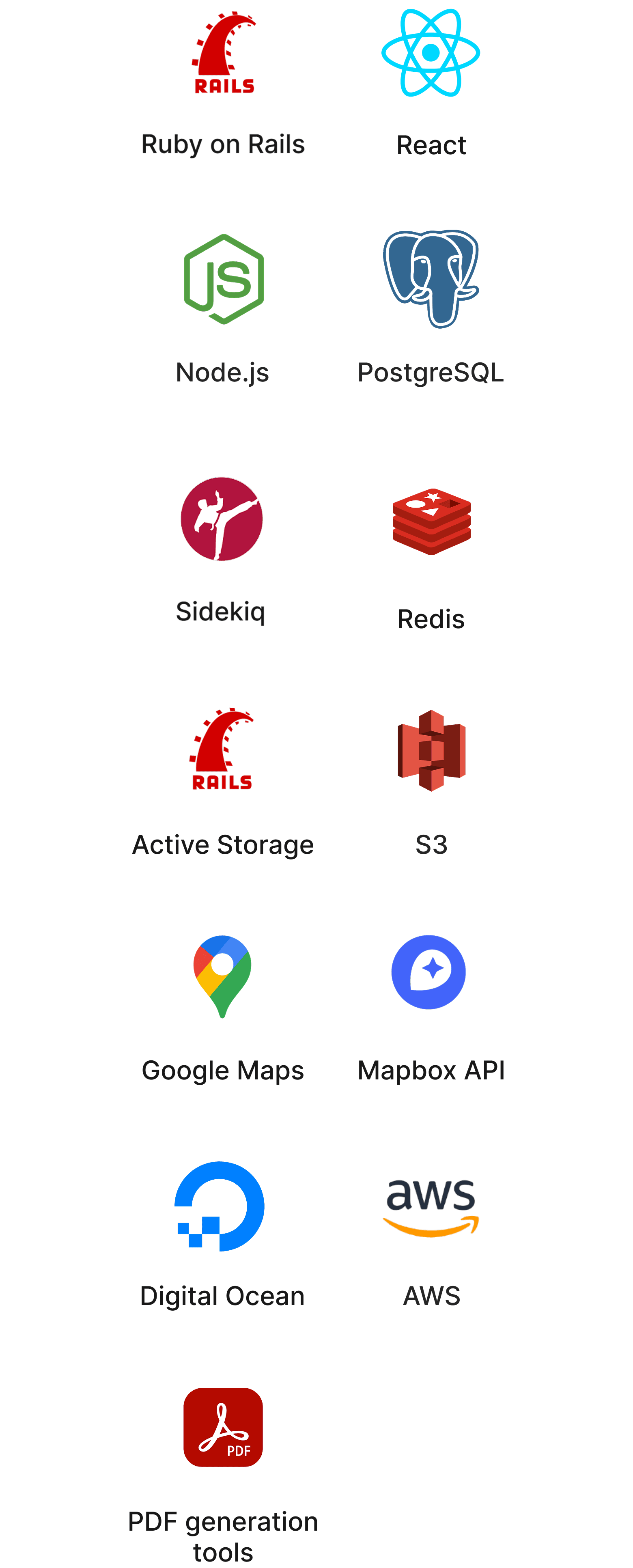
TECH STACK

TECH STACK
DISCOVER OTHER
PROJECTS
DISCOVER OTHER
PROJECTS

Got an idea or a question?
Leave your contact details - we’ll get in touch, answer your questions, and help make your idea happen.
Got an idea
or a question?
Leave your contact details - we’ll get in touch, answer your questions, and help make your idea happen.
Got an idea or a question?
Leave your contact details - we’ll get in touch, answer your questions, and help make your idea happen.
Your brand must be secure. Let’s build it right.
2026©All rights reserved.
Your brand must be secure. Let’s build it right.
2026©All rights reserved.
Your brand must be secure. Let’s build it right.
2026©All rights reserved.